Books are more durable than they look and more fragile than we treat them. A paperback can survive a beach holiday, a coffee spill, and a decade in a backpack. It can also quietly warp, foxed and cockled, simply from sitting in the wrong spot for a few years. Most book damage is not dramatic. It is slow, environmental, and entirely preventable once you know what to watch for.
I keep a fairly large home library and have made every mistake on this list, which is how I learned them. None of this requires special equipment or a climate-controlled room. It is mostly about a few habits and avoiding a handful of common, slow-acting errors. Here is what actually keeps a collection in shape.
Shelve them right#
How a book sits on a shelf determines how it ages. The goal is to keep the spine and the text block in their natural shape, which means upright and properly supported. Get this wrong and gravity does slow, permanent damage.
A few rules that prevent most shelving damage:
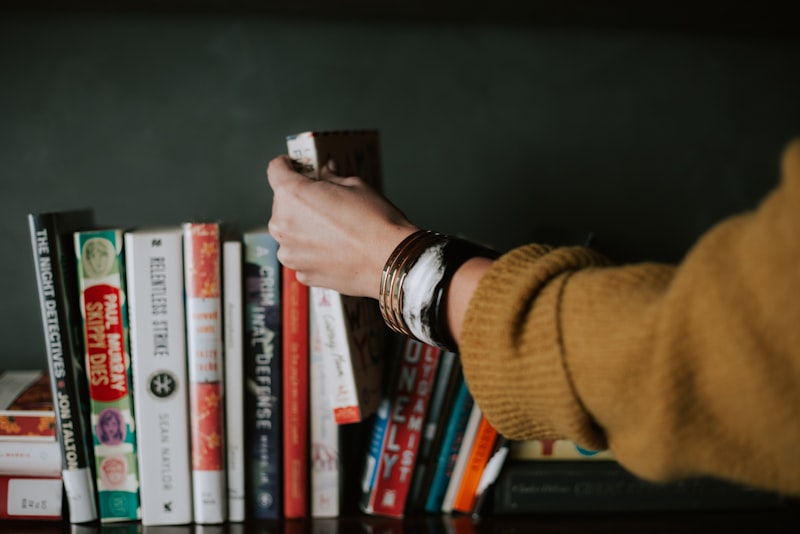
- Stand books upright, snug but not crammed. A book that leans at an angle for months will set into that lean, the spine pulling and the pages skewing. Use bookends so the row stays vertical.
- Do not pack the shelf so tight you have to yank. Pulling a book out by the top of the spine, the headcap, is how spines tear. Leave enough room to grip the body of the book.
- Lay oversized or heavy books flat. Large art books and atlases are too heavy to stand without warping their own covers. Stack them flat, a few at most, with the biggest on the bottom.
- Never store books with the spine up or fanned open. Spine-up stacking pulls the text block away from the binding. An open book left face-down cracks the spine.
A leaning book is a book in the slow process of being reshaped. Straighten your rows now and your spines will thank you in five years.
If your shelving itself needs rethinking before any of this works, it is worth pairing care with a sensible plan for how to organize your home library, because a well-arranged shelf is also a well-preserved one.
Control light, damp, and heat#
Paper has three main enemies, and all of them are about environment rather than handling. Manage these and you have solved most of the problem.
Sunlight is the worst offender. Direct sun fades spines, yellows pages, and dries out bindings until they crack. A bookshelf in front of a sunny window will bleach its front row within a season or two. Keep shelves out of direct light, or hang a curtain or blind on the worst window. Faded spines do not recover.
Damp is the quiet killer. Humidity warps covers, cockles pages, and, given enough time, invites mould and the brown speckling called foxing. Bookcases against cold external walls, in basements, or near bathrooms are the usual trouble spots. Keep books a little away from outside walls so air can move behind them, and if a room is genuinely damp, a small dehumidifier earns its keep. Equally, very dry heat from a radiator or vent dries bindings out, so do not shelve books directly above a heat source.
Stability matters as much as the numbers. Books cope far better with a steady, moderate environment than with a room that swings hot and cold, wet and dry. Aim for somewhere your collection would also be comfortable to sit and read, and you are most of the way there.
Cleaning without causing harm#
The instinct to clean a dusty old book the way you would clean a surface is exactly the instinct to suppress. Water and household cleaners are disastrous on paper and cloth. Almost all routine book cleaning is dry, gentle, and patient.
For everyday dust, here is the safe sequence:
- Hold the book firmly closed so dust does not fall into the text block.
- With the book tilted slightly downward, brush or wipe the top edge of the pages from the spine outward, away from the binding.
- Use a soft, dry cloth or a clean, soft brush. A microfibre cloth works well for covers.
- For tight grime in the hinges, a soft brush moves more than a cloth can.
Never use spray cleaner, baby wipes, or a damp cloth on paper, and never on a cloth or leather cover. If a book is genuinely valuable and damaged, that is a job for a professional conservator, not a kitchen experiment. For a musty smell, air the book in a dry, shaded spot, or stand it for a while in a closed box with something odour-absorbing like baking soda nearby, never touching the pages. Patience does what moisture would ruin.
Packing books for a move#
A move is when most collections take their worst beating, because the same instinct ruins both your books and your back: filling a big box to the top. A box of books gets heavy fast, and a heavy box gets dropped, crushed, or torn.
Pack like this and your books arrive intact:
- Use small boxes. Book boxes exist for a reason. A small box full of books is already heavy. A large one is unliftable and tempts you to overfill.
- Pack spine-down or flat, never spine-up. Standing books on their fore-edge, the open side down, lets the text block sag away from the spine. Lay them flat or stand them on the spine.
- Fill gaps so nothing shifts. Loose books slide and bump in transit. Pad the gaps with paper or soft items so the load stays still.
- Keep valuable or fragile books separate. Wrap special volumes individually and carry them yourself rather than trusting them to the bottom of a stack.
- Never store boxed books in a damp garage or loft long-term. A short move is fine. Months in an uninsulated space brings back every humidity problem you just learned to avoid.
The same logic applies to any long-term storage. Boxed books want a dry, stable, dark place, lying flat or upright, in containers small enough that the weight does not crush the lower layers.
Small habits, long-lived books#
Caring for books is not a project you complete. It is a handful of defaults you adopt and then mostly forget about. Shelve them upright and snug. Keep them out of the sun and away from damp. Clean them dry and gently. Pack them small and flat when they move. None of it is demanding, and all of it compounds.
The reward is a collection that still looks and feels good decades from now, the same copies you read the first time rather than replacements for ones that warped or yellowed. Books are meant to be used, not embalmed, so none of this should make you precious about reading them. It just means the book you love at thirty is still the book you can hand to someone at sixty, spine straight and pages clean, ready to be read again.