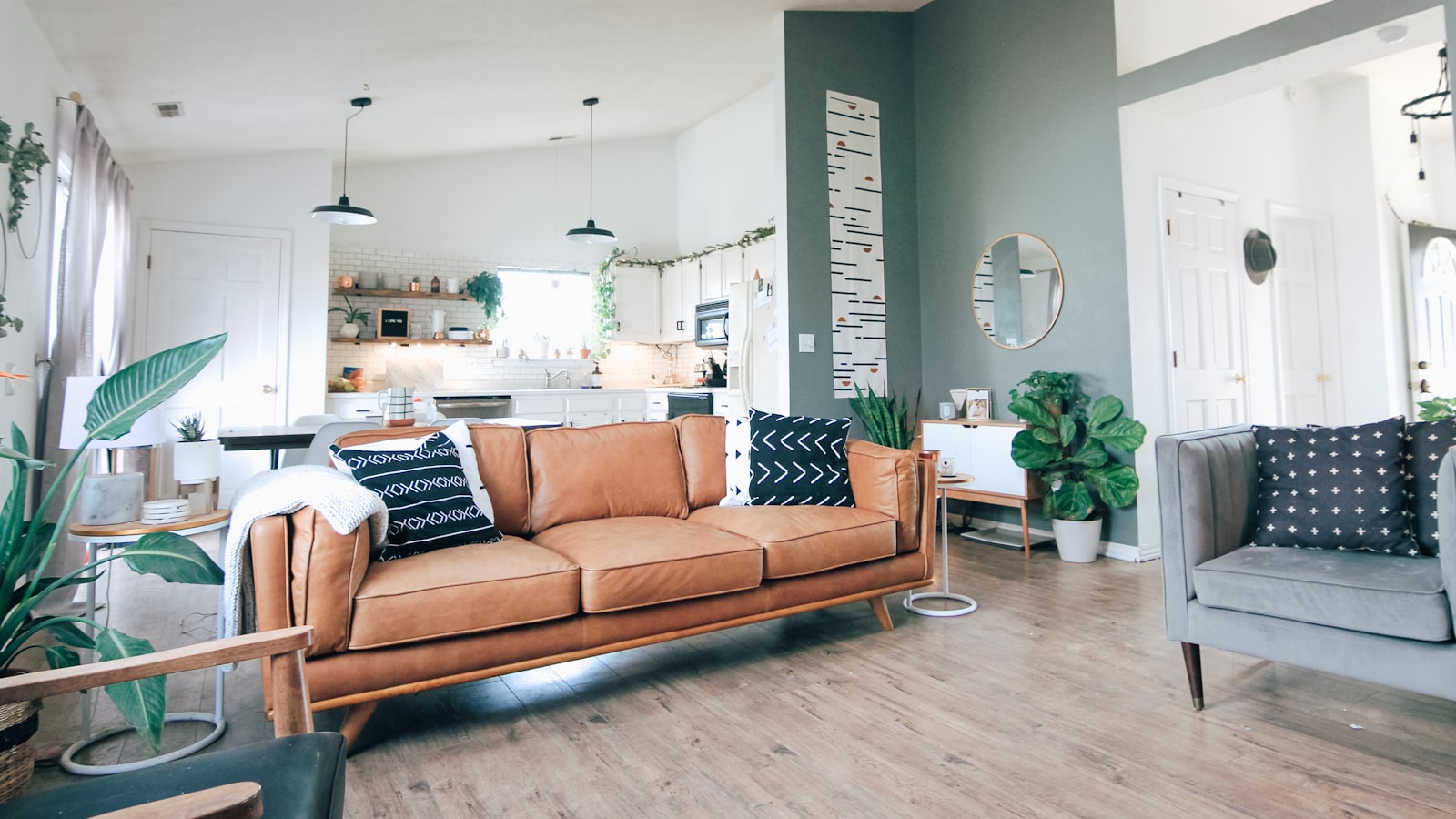
A reading nook is not really about comfort, though comfort is part of it. It is about gravity. The point of a dedicated reading spot is to create a small pocket of your home that gently pulls you toward a book, so that sitting down and opening one becomes the path of least resistance rather than a decision you have to make against the lure of the sofa and the screen. Get it right, and you find yourself reading without quite deciding to.
I am a great believer in designing your environment to do your willpower's work for you. A reading nook is the most pleasant version of that idea. You are building a physical cue that says, in effect, this is where we read now. Below is how I'd assemble one, in roughly the order that matters, starting with the two things that make or break it.
Get the chair right before anything else#
Everything begins with where you sit, because a nook you cannot comfortably occupy for an hour is just attractive furniture. The chair does not need to be expensive or fashionable. It needs to support you in the position you actually read in, which is rarely the upright posture furniture showrooms assume.
Pay attention to how your body wants to be when you read. Do you tuck your feet up? Then you need a deep seat or an armchair with broad arms, not a slim dining chair. Do you like to recline? A wingback or a chair that leans, with a footstool, will keep your neck from aching after twenty minutes. The test is simple and worth doing properly: sit in the candidate chair with a book for a full chapter before you commit. The flaws that don't show up in five minutes show up clearly in thirty, and those are the ones that quietly stop you reading there.
A footstool or ottoman deserves a special mention, because raising your legs changes everything about how long you can stay put. It is the cheapest upgrade with the biggest return, and most people skip it.
Light it so your eyes don't tire#
The second non-negotiable is light, and it is the detail people get wrong most often. Too dim and your eyes strain and you drift off. Too harsh and the spot feels like an interrogation rather than a refuge. You want warm, directed light that falls onto the page from behind or beside you, not overhead glare and not a lamp shining into your eyes.
Natural light is the prize, so if you can put your nook by a window, do. A window also gives you something to rest your gaze on between chapters, which is its own small pleasure. But daylight runs out, and most reading happens in the evening, so the artificial light matters more in practice. Aim for a dedicated reading lamp with a warm bulb, positioned over your shoulder.
The light should fall on the page, not in your eyes. If you find yourself squinting or angling the book to dodge a glare, the lamp is in the wrong place, not your eyes in the wrong decade.
An adjustable lamp earns its keep here, letting you aim the beam exactly where the book is rather than hoping a fixed fixture happens to cooperate. Get the chair and the light right and you have eighty percent of a great nook. The rest is refinement.
Keep everything you need within arm's reach#
The fastest way to break a reading spell is to stand up. The moment you get out of the chair to fetch a glass of water or find a bookmark, the screen catches your eye, the kitchen distracts you, and twenty minutes later you have not returned. So the design principle for a nook is ruthless: everything you might need should be reachable without leaving the seat.
A small side table is the heart of this. On or around it, keep the few things that otherwise send you wandering:
- A drink. Water, tea, coffee, whatever you reach for. A coaster so you don't fret about the table.
- A light source you can switch from your seat, so you are never reading by the glow of a distant lamp.
- A blanket within grabbing distance, because the moment you get cold you'll get up, and getting up ends the session.
- A bookmark, a pen, and a notebook, so that marking your place or jotting a thought never requires a hunt. If you like to write in the margins, this is also where the habit of taking notes on books quietly takes root.
- The next book or two, so finishing one does not mean a trip to the shelves and a detour into the rest of your life.
The principle behind all of it is that friction is the enemy of reading. Every small obstacle between you and the next page is an opening for distraction. A well-stocked side table closes those openings one by one.
Add the comforts that make it a refuge#
With the essentials handled, the finishing touches are what turn a functional corner into a place you actively want to be. These are personal, and the point is texture, the small sensory cues that make the spot feel like a retreat rather than a chair you happen to read in.
Think about the senses one at a time:
- Touch. A soft throw, a cushion at your back, a rug under your feet so the floor isn't cold.
- Smell. A candle or nothing at all, but a consistent scent becomes part of the cue over time.
- Sound. Either quiet, or a low background you control, never a television within earshot.
- Sight. A plant, a small shelf of favorites, a view, anything that makes the corner pleasant to look up into.
Do not overdo it. A nook crammed with decorative clutter stops being restful and starts being another surface to tidy. The comforts should serve the reading, not compete with it. A blanket you reach for and a candle you light are part of a ritual. A dozen ornaments are just dusting.
Make it a place for reading and nothing else#
The final ingredient is invisible, and it is the most important: the nook needs a single, protected purpose. The instant it becomes the place you also answer emails, scroll your phone, or take work calls, it loses its gravity. Your brain stops associating the chair with reading and starts associating it with the same low-grade busyness as everywhere else.
So guard it. The strongest rule I know is the simplest: the phone is not invited. Leave it in another room, or at least face-down and across the space, so reaching for it is a deliberate act rather than a reflex. The nook is for the book, and that single-mindedness is what makes it work. It is the physical companion to building a reading routine, the kind of small, repeatable cue I lean on in how to build a daily reading habit.
Over a few weeks, the association sets. Sitting down in that chair, under that light, with that blanket, starts to mean reading the way a kitchen means cooking, automatically and without a fight.
Where the corner takes you#
A reading nook is a small piece of furniture and a large piece of intention. None of the individual parts is remarkable, a chair, a lamp, a table, a blanket. What makes it powerful is the way they combine into a spot that asks almost nothing of you except to sit down and open the book, which is the whole battle most days.
Build it for the body you actually read in, light it so your eyes relax, keep everything within reach, and protect its one purpose fiercely. Do that and you will have made something better than a pretty corner. You will have built a place that quietly turns "I should read more" into "I think I'll go sit in my chair," which is the only version of that resolution that ever comes true.